When is the best time to go gorilla trekking?
Gorilla trekking is one of Africa’s most extraordinary wildlife experiences, offering a rare opportunity to come face-to-face with endangered mountain gorillas in their natural habitat. Found only in a few protected regions—most notably Bwindi Impenetrable National Park and Mgahinga Gorilla National Park in Uganda, as well as in parts of Rwanda and the Democratic Republic of Congo—this once-in-a-lifetime adventure is shaped significantly by timing. Choosing the best time to go gorilla trekking can influence not only your comfort and accessibility but also the overall quality of your encounter.
Unlike typical safaris, gorilla trekking takes place in dense tropical forests where weather conditions play a crucial role. The region experiences a mix of wet and dry seasons, each offering distinct advantages. The dry seasons—generally from June to September and December to February—are widely considered the best times to visit. During these months, trails are less muddy, hiking conditions are easier, and visibility in the forest is better, making it more comfortable to track and observe gorillas.
Best time for gorilla trek in Rwanda, Uganda and Congo
 It is important to note that Mountain gorillas can be tracked at any time of the year because their movements are not affected by changing seasons. Even though we will be discussing the pros and cons of visiting in a particular time of the year, tourists shouldn’t be too selective on which month to go trekking. In our experience, the perfect time to track gorillas is just after the rainy season has ended and the countryside is still looking green. Getting this time right is not easy considering that global warming has affected weather patterns in Africa making it difficult to predict the beginning and end of the wet and dry seasons. At the end of the day, the final decision of when to visit remains with the traveler. Our part is to help identify the advantages and disadvantages of visiting in each of the seasons.
 Like most counties lying along the equator zone, Uganda, Rwanda and the Democratic Republic of Congo have two dry and wet seasons. The dry season falls in the months between December to February and again between June to October. Gorilla trekking during the dry season has its advantages. It is also the best time for wildlife safaris in Kenya’s Masai Mara, Tanzania’s Serengeti and the various national parks in Uganda. Visitors can easily combine gorilla trekking with a safari to see the wildebeest migration and safaris in Uganda’s Murchison Falls or Queen Elizabeth National Park. This is the best time to take good and clear photos of the countryside, physical features and the mountain gorillas because there are no obstructions like mist or overgrown vegetation.
The dry season has its disadvantages. It is generally more expensive to travel around this period. Gorilla permits are difficult to find and booking last minute gorilla tours is not easy. The dry season is not the best time to visit for those hoping for an easier trek or being assigned a nearby gorilla group. If you are targeting a particular gorilla group or sector of the park, we recommend that you book your trip in advance. There are those who think gorilla trekking during the dry season denies tourists and particular nature lovers a chance to admire how green Africa is during the rains. Those visiting the countries for the first time may leave with an impression of a dry Africa which is not always the case.
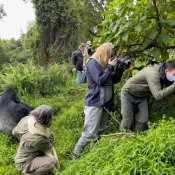
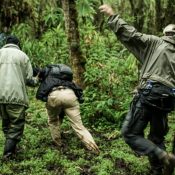
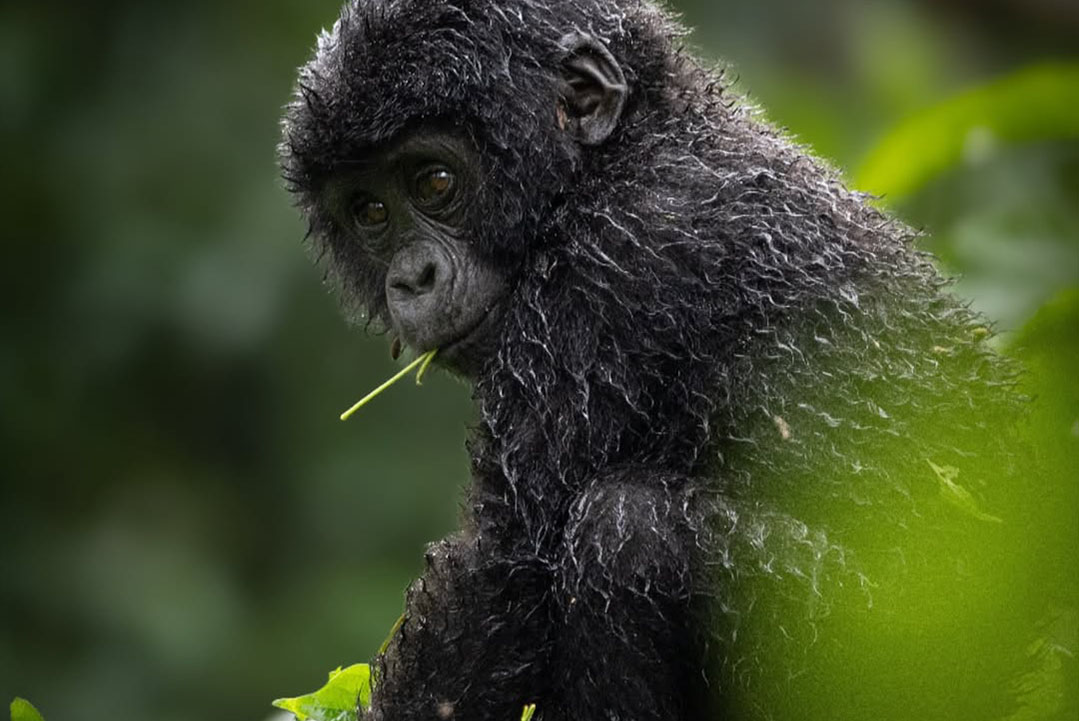
 The months of March to May and late October to November are considered rainy seasons – also referred to as low travel seasons. The forests can get very muddy and tracking mountain gorillas becomes more challenging. We cannot rule out mud even during the dry season because mountain gorillas live in rain forests. The rains can occur at any time of the year. It is important to also note that the rains in Uganda, Rwanda and Congo do not go on throughout the day like it is in Europe or North America. It rains for between one to two hours before the sun appears again thus enabling the activity to go on regardless of whether it is raining or not. During the rain season, tourists are given rain jackets to go with it for tracking just in case it rain. Gorilla trekking can never be cancelled because of too much rain. In fact, when raining, the gorillas gather in one place hence allowing tourists to see them closely in one spot. We often receive feedback from Travelers who found gorilla trekking during the rainy season more adventurous despite the mud. You might want to read about the packing list for a safari in Uganda.
Best time to go gorilla trekking in Uganda
One of the advantages of tracking gorillas during the rainy season is that you find the park with less visitors/crowds. This implies that you can have the forest all to yourself and have more close encounters with the primates. The fewer trackers are divided into much smaller groups to visit each family. Instead  of 8 individuals per gorilla family like it is during the dry season, you will be about three per gorilla group. You can also book gorilla permits and a tour a few weeks or days to the trip. Tourists who wish to combine gorilla trekking with birding will find the rainy season perfect. This is the breeding season and the forests are full of activity. Traveling during the wet season is generally less expensive compared to the dry season because most hotels reduce their rates to attract more guests. You can stay in one of the best luxury lodges that would seem too expensive during the peak season. During the low or wet seasons, visitors may also get discounts for gorilla permits in Congo. Congo’s gorilla permits cost $450 during the peak season but can be reduced up to $200 during low season. The price for a Gorilla permit remains the same in Rwanda and Uganda even during the low season.
All in all, the decision on when to go for gorilla trekking rests entirely with the Traveler. Travelers have to take into consideration time constraints, budget, overall fitness, convenience and many of the things discussed above.
Final Verdict: When Should You Go?
The best time for gorilla trekking is during the dry seasons—June to September and December to February when conditions are ideal for hiking and wildlife viewing. However, if you’re looking for fewer crowds, lower costs, and don’t mind a bit of rain, the wet seasons can offer a rewarding and more private experience.
Ultimately, gorilla trekking is a year-round adventure, and each season brings its own unique charm.
Pro Tip for a Seamless Experience
Bundle your gorilla permit with a guided safari package through trusted operators. This ensures all logistics from permits to transport and accommodation are handled professionally, allowing you to focus entirely on the unforgettable experience of հանդիպing mountain gorillas in the wild.