
Where can I see mountain gorillas? The Best Destinations for an Unforgettable Gorilla Trekking Experience
Where can I see mountain gorillas? Seeing a mountain gorilla in the wild is one of the most powerful wildlife encounters on Earth. These gentle giants, sharing 98% of our DNA, live only in a few protected mountain forests in Central and East Africa. Their rarity, intelligence, and close resemblance to humans make gorilla trekking a once-in-a-lifetime experience — but where exactly can you see them?
This guide explores the only places on Earth where mountain gorillas still survive: Uganda, Rwanda, and the Democratic Republic of Congo (DRC). We’ll break down what makes each destination unique, what to expect, and how to plan your visit.
The Natural Range of Mountain Gorillas
Mountain gorillas (Gorilla beringei beringei) live only in two isolated regions of Central and East Africa — the Virunga Massif and Bwindi Impenetrable National Park in Uganda. Together, these mist-covered forests shelter just over 1,000 gorillas, the only wild population on Earth.
The Virunga Massif
This volcanic mountain range spans Rwanda, Uganda, and the Democratic Republic of Congo, encompassing Volcanoes, Mgahinga, and Virunga National Parks. The region’s bamboo forests and cool, high-altitude slopes are home to about one-third of the world’s mountain gorillas. It’s also where Dian Fossey conducted her pioneering research, helping to protect these gentle giants.
Bwindi Impenetrable National Park
Located in southwestern Uganda, Bwindi is a UNESCO World Heritage Site famous for its dense rainforest and rich biodiversity. Nearly half of all mountain gorillas live here, along with hundreds of bird and butterfly species. Trekking through Bwindi’s tangled vines and misty valleys is one of Africa’s most unforgettable adventures.
These two regions form the last refuge for mountain gorillas — a true conservation success story that continues to inspire travelers and wildlife lovers around the world.
Where can I see mountain gorillas?
Uganda: The Pearl of Africa
Uganda offers the most diverse and affordable gorilla trekking experiences. The country protects over half of the world’s remaining mountain gorillas, primarily in two national parks:
Bwindi Impenetrable National Park
Located in southwestern Uganda, Bwindi Impenetrable National Park is one of Africa’s most famous and biologically rich rainforests — a true haven for wildlife enthusiasts. Declared a UNESCO World Heritage Site, this ancient forest is home to nearly half of the world’s remaining mountain gorillas, with more than 20 habituated families open for trekking.
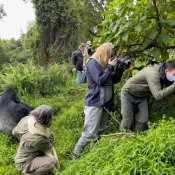
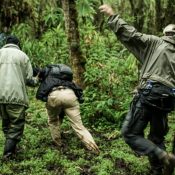
The park’s name, “Impenetrable,” says it all — its dense jungle, tangled vines, and steep ridges create a challenging yet incredibly rewarding trekking experience. Treks can last anywhere from 1 to 6 hours, depending on where the gorilla family is located on a given day. As you hike through misty valleys and towering trees, the calls of birds and rustling leaves surround you, building anticipation until that magical moment when you finally spot a gorilla family in the wild.
Bwindi is also home to rare forest elephants, several primate species, and over 350 bird species, making it a paradise for nature lovers. The park is divided into four main trekking sectors — Buhoma, Ruhija, Rushaga, and Nkuringo — each offering unique terrain, gorilla groups, and accommodation options ranging from luxury eco-lodges to cozy community-run camps.
If you’re looking for a true jungle adventure that combines rich biodiversity with an intimate gorilla experience, Bwindi is an unbeatable destination.
Mgahinga Gorilla National Park
Tucked away in Uganda’s far southwestern corner, Mgahinga Gorilla National Park forms part of the Virunga Volcano range, where Uganda meets Rwanda and the Democratic Republic of Congo. Though it’s the country’s smallest national park, Mgahinga offers spectacular volcanic scenery, panoramic views, and a peaceful trekking experience away from crowds.
This park is home to the Nyakagezi gorilla family, a playful and photogenic group known for their charismatic interactions. Treks here are generally shorter and more relaxed than in Bwindi, making it an excellent choice for travelers seeking a quieter, more personal encounter with the gorillas.
Beyond gorilla trekking, Mgahinga offers additional adventures such as golden monkey tracking, volcano hiking, and birdwatching. You can even climb one of the park’s three extinct volcanoes — Mount Sabinyo, Mount Gahinga, or Mount Muhabura — for breathtaking views across three countries.
With its tranquil atmosphere, stunning landscapes, and diverse activities, Mgahinga is perfect for those who want to blend adventure, photography, and serenity in one unforgettable experience.
Permit Price in Uganda (2025):
USD $800 per person — including park fees, ranger guides, and one hour with the gorillas.
Why Choose Uganda:
-
Great balance between cost and experience.
-
High success rate of finding gorillas.
-
Opportunity to combine with other attractions like chimpanzee trekking, Queen Elizabeth safaris, and Lake Bunyonyi relaxation.
Rwanda: The Land of a Thousand Hills
Rwanda’s Volcanoes National Park offers the most accessible gorilla trekking experience. Located just 2.5 hours from Kigali, it’s perfect for travelers seeking comfort, efficiency, and luxury.
 Volcanoes National Park
Located in the northwest of Rwanda, Volcanoes National Park is one of Africa’s most iconic wildlife destinations and the country’s top gorilla trekking spot. The park forms part of the Virunga Massif, a dramatic landscape of five towering volcanoes — Karisimbi, Bisoke, Sabyinyo, Muhabura, and Gahinga — all cloaked in mist and bamboo forest. It’s here that the legendary primatologist Dian Fossey conducted her groundbreaking research on mountain gorillas, forever changing the world’s perception of these gentle creatures.
Volcanoes National Park is renowned for its well-organized and accessible trekking experience. The park’s trails are well-maintained, and its proximity — just a 2.5-hour drive from Kigali International Airport — makes it the most convenient destination for short trips or luxury safaris. Trekkers are guided by skilled rangers who track the gorillas daily, ensuring high chances of sighting. The experience itself is mesmerizing — walking through cool mountain air, listening to the forest’s rhythmic hum, and finally finding yourself face-to-face with a family of gorillas feeding or grooming peacefully in the undergrowth.
In addition to gorilla trekking, Volcanoes National Park offers other incredible activities like golden monkey tracking, Dian Fossey’s tomb hike, and volcano climbing. Many visitors also combine their trek with cultural encounters in nearby communities, where traditional Rwandan dances and storytelling bring the region’s rich heritage to life.
With its exceptional infrastructure, breathtaking scenery, and commitment to conservation, Volcanoes National Park is ideal for travelers seeking a luxury or short-stay gorilla trekking experience.
Permit Price in Rwanda (2025):
USD $1,500 per person — one of the highest in Africa, but it includes world-class service and conservation support.
Why Choose Rwanda:
-
Short travel time from the airport to the park.
-
High-end lodges and excellent road infrastructure.
-
Ideal for luxury or short-stay travelers.
Bonus Tip:
Combine your trek with a visit to Kigali Genocide Memorial, or extend your trip to Nyungwe Forest for chimpanzee tracking and Lake Kivu for relaxation.
Democratic Republic of Congo: The Wild Frontier
If you crave a truly off-the-beaten-path adventure, the DRC’s Virunga National Park delivers raw, untamed wilderness. It’s Africa’s oldest national park and home to some of the continent’s most dramatic volcanic landscapes.
 Virunga National Park
-
For travelers with a taste for adventure, Virunga National Park in the eastern Democratic Republic of Congo offers one of the most raw and thrilling gorilla trekking experiences in Africa. Established in 1925, Virunga is Africa’s oldest national park and a UNESCO World Heritage Site. It’s part of the broader Virunga ecosystem shared with Rwanda and Uganda, yet it remains the most wild and untouched of the three.
The park is famous not only for its mountain gorillas, but also for its dramatic landscapes — from lush rainforests and bubbling lava fields to the active Mount Nyiragongo Volcano, home to one of the world’s largest lava lakes (currently closed to visitors but expected to reopen in the future). Trekking here is an adventure through untamed nature, where mist rolls through valleys and the calls of distant primates echo across the forest.
Gorilla trekking in Virunga is a more intimate experience, with fewer tourists and smaller trekking groups. The gorillas here are closely monitored and habituated, and the park’s conservation team has worked tirelessly to protect them despite years of instability in the region. Visitors often describe the experience as deeply emotional and raw, thanks to the park’s authenticity and the resilience of its conservation efforts.
Virunga’s gorilla trekking permits are also the most affordable in Africa, at around USD $400 per person — a fraction of Rwanda’s cost. Despite the lower price, the experience is world-class, offering a chance to connect with nature in one of the planet’s most extraordinary settings.
Because of occasional security concerns, travelers are advised to book through trusted tour operators or the official Virunga Foundation, which ensures safety, logistics, and local support.
For the bold and nature-loving traveler, Virunga promises an unforgettable adventure into Africa’s wild heart — one that captures the true spirit of exploration and conservation.
Permit Price in DRC (2025):
Around USD $400 per person — the most affordable option.
Why Choose DRC:
-
Remote and authentic experience.
-
Great for seasoned adventurers.
-
Contributes directly to rebuilding conservation after years of instability.
Safety Note:
Always check the latest travel advisories or book through trusted tour operators, as conditions can change.
Quick Comparison: Uganda vs. Rwanda vs. DRC
When it comes to gorilla trekking, Uganda, Rwanda, and the Democratic Republic of Congo (DRC) each offer a unique experience shaped by their terrain, accessibility, and travel style.
Uganda is often considered the best all-around destination for gorilla trekking. With over 600 mountain gorillas, it hosts more than half of the world’s remaining population. Treks in Bwindi Impenetrable Forest and Mgahinga Gorilla National Park are adventurous, with steep trails winding through thick jungle — perfect for travelers who love a challenge and want a truly wild experience. At $800 per permit (2025), Uganda offers excellent value. Beyond gorillas, you can also enjoy chimpanzee tracking in Kibale Forest, Big Five safaris in Queen Elizabeth National Park, and scenic boat rides on Lake Bunyonyi.
Rwanda is the most accessible and luxurious gorilla trekking destination. The Volcanoes National Park is just a 2.5-hour drive from Kigali, making it ideal for short trips or high-end safaris. The trekking experience is generally easier thanks to well-maintained trails and excellent organization. Rwanda’s strong conservation record, world-class lodges, and cultural warmth make it a top pick for travelers seeking comfort and convenience. However, permits are priced at $1,500 per person, reflecting the premium experience.
The Democratic Republic of Congo (DRC) offers the most raw and off-the-beaten-path adventure. Trekking in Virunga National Park is a journey into untouched wilderness, where fewer tourists mean more intimate encounters with gorillas. The park’s permits are the most affordable at around $400, but the experience is best suited for experienced or adventurous travelers due to its remote location and occasional security challenges. Virunga also stands out for its dramatic volcanic landscapes and opportunities for volcano treks and other eco-adventures.
In summary, Uganda combines value and variety, Rwanda delivers luxury and ease, while DRC captures the true spirit of adventure. No matter which destination you choose, each offers an unforgettable encounter with the world’s last remaining mountain gorillas.
Conservation Impact
 Each country’s gorilla trekking program supports community development and habitat protection.
-
In Uganda and Rwanda, 20% of permit fees go directly to local communities.
-
Gorilla tourism has helped the population recover from fewer than 300 in the 1980s to over 1,000 today — a rare conservation success story.
Final Thoughts
Whether you choose Uganda’s misty Bwindi, Rwanda’s scenic Volcanoes National Park, or DRC’s raw Virunga wilderness, you’re in for one of the most emotional wildlife experiences imaginable.
Standing just meters away from a silverback gorilla in the heart of the African rainforest isn’t just an adventure — it’s a life-changing encounter that connects you to nature in a deeply personal way.
So pack your hiking boots, grab your camera, and prepare for an unforgettable journey into the world of the mountain gorillas — where the wild still whispers, and the forest breathes life
Frequently Asked Questions About Seeing Mountain Gorillas
1. Is it safe to go gorilla trekking?
Yes, gorilla trekking is very safe when done through authorized national parks and licensed tour operators. All treks are guided by armed rangers and experienced trackers who monitor gorilla movements daily. They ensure both visitor safety and minimal disturbance to the gorillas. The gorillas you’ll visit are habituated, meaning they’re used to human presence and not aggressive.
2. How fit do I need to be to go gorilla trekking?
You don’t need to be an athlete, but a moderate level of fitness helps. Treks can involve climbing steep, muddy hills or walking for several hours through dense vegetation. Park authorities assign groups based on fitness level, so if you prefer an easier hike, you can request one during the briefing.
Tip: Light training (hiking or walking 3–5 km daily) before your trip can make the experience more enjoyable.
3. When is the best time to see mountain gorillas?
Gorilla trekking is available year-round, but the dry seasons offer the best conditions:
-
June to September
-
December to February
During these months, trails are less slippery, and the forest is easier to navigate. However, the wet seasons (March–May and October–November) offer fewer crowds and lush, photogenic landscapes.
4. Why are gorilla trekking permits so expensive?
Gorilla permits are expensive because the revenue funds critical conservation and community projects. A portion goes to anti-poaching patrols, gorilla monitoring, habitat restoration, and local schools and health centers. The high permit cost also helps limit visitor numbers, protecting the gorillas from overexposure and stress.
5. What should I wear or bring for gorilla trekking?
Here’s what to pack for a comfortable trek:
-
Waterproof hiking boots with ankle support
-
Long-sleeved shirt and trousers to protect from insects and thorns
-
Rain jacket or poncho for unpredictable showers
-
Gardening gloves to grip vines and protect your hands
-
Refillable water bottle, snacks, and energy bars
-
Camera (without flash) for photos
-
Gaiters or long socks to keep ants out
-
Walking stick (provided by park or porter)
Pro Tip: Hire a local porter — it’s affordable and directly supports community livelihoods.
6. Can I see gorillas anywhere else in Africa?
No — mountain gorillas live only in Uganda, Rwanda, and the Democratic Republic of Congo. There are lowland gorillas in other parts of Central Africa (like Gabon and Congo-Brazzaville), but they are a different subspecies and usually harder to access.
7. Can I take pictures of the gorillas?
Yes, photography is allowed — but flash is strictly prohibited. The flash can startle gorillas and stress them. Use natural light or adjust your ISO settings to capture great shots. Bring a rain cover for your camera and carry extra batteries, as humidity drains power quickly.
8. Can children go gorilla trekking?
Most national parks have a minimum age limit of 15 years for gorilla trekking. This rule protects both the children and the gorillas, as kids are more likely to make sudden movements or noises and are more vulnerable to transmitting illnesses.
9. Where can I stay during my gorilla trekking trip?
Each park offers a wide range of accommodation options:
-
Uganda: From luxury lodges like Sanctuary Gorilla Forest Camp to budget-friendly stays in Buhoma or Rushaga.
-
Rwanda: Upscale lodges such as One&Only Gorilla’s Nest and Sabyinyo Silverback Lodge near Volcanoes National Park.
-
DRC: Eco-lodges near Goma and within Virunga National Park, such as Mikeno Lodge.
Booking early (especially in the dry season) is recommended since lodge availability is limited.
10. How close can I get to the gorillas?
Visitors must maintain a minimum distance of 10 meters (about 32 feet) from the gorillas. This rule helps prevent disease transmission and ensures the gorillas feel safe. Sometimes, curious juveniles may approach — but trekkers should stay still and allow rangers to manage the situation.