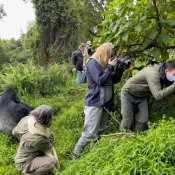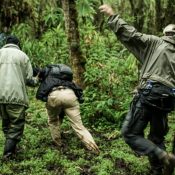
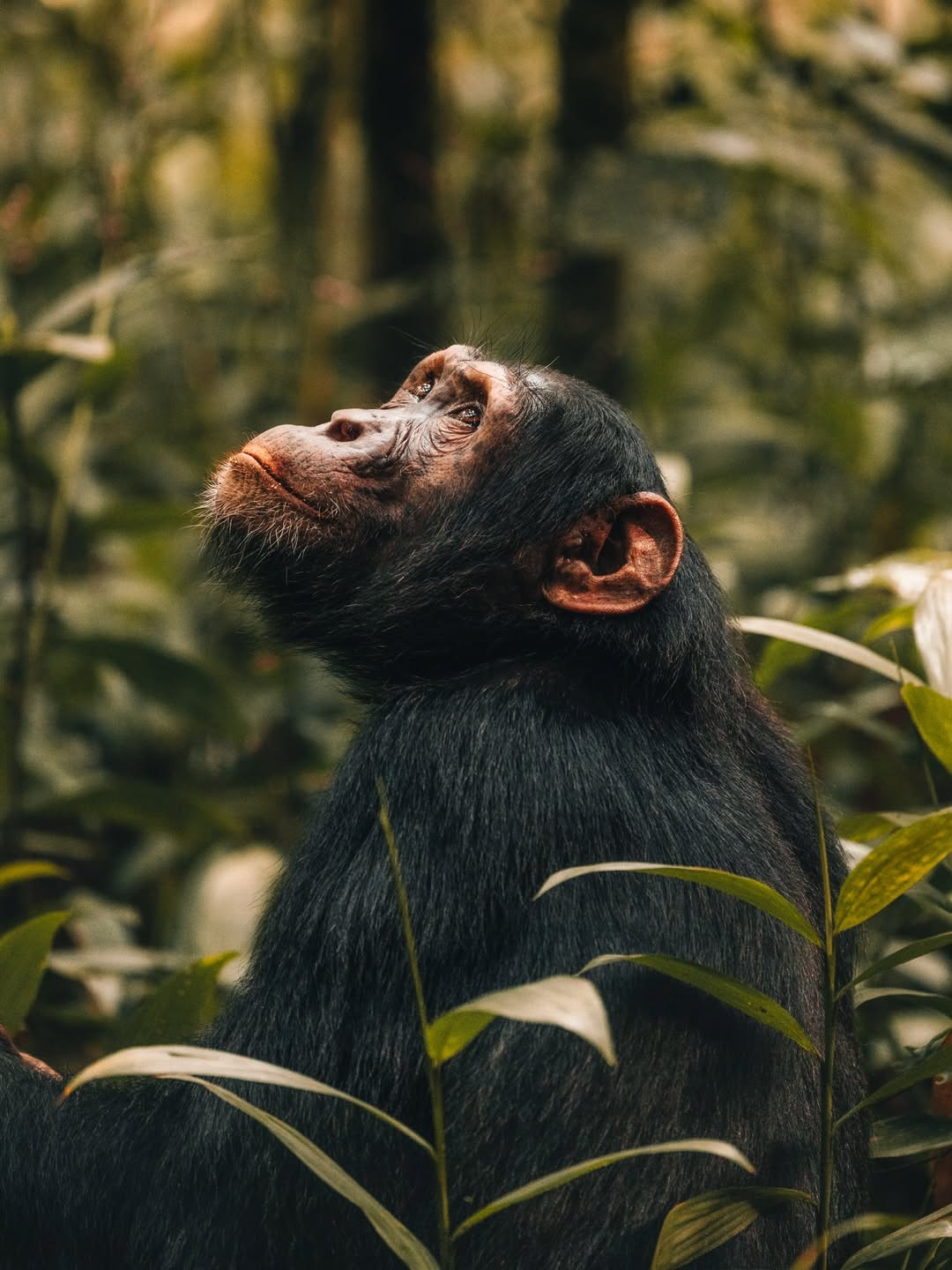
Ngogo chimpanzee community is deep in the heart of Kibale National Park with one of the most extraordinary wildlife research sites in the world. A dense chimp population that has transformed our understanding of primate behavior and social complexity. The long-term study of these chimpanzees began in the early 1990s under the Ngogo Chimpanzee Project, led by renowned primatologists David Watts and John Mitani. Their mission was ambitious: to observe chimpanzees continuously over decades in order to uncover how they form relationships, compete for dominance, raise offspring, and survive in a dynamic forest environment.
Over time, researchers identified and tracked hundreds of individual Chimpanzee, documenting their family lineages, alliances, rivalries, and even personality traits. This level of detail has turned Ngogo into what many scientists call a “living laboratory,” where real-time behavioral patterns—from cooperation and hunting strategies to political maneuvering and conflict—can be studied in ways rarely possible in the wild.
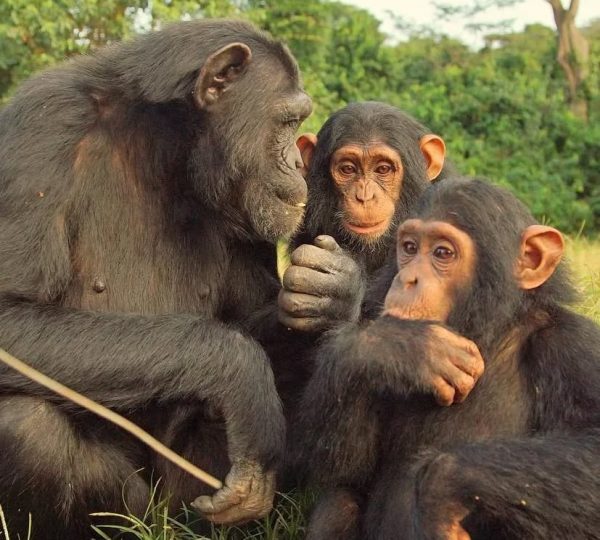
Kibale National Park’s Ngogo Chimpanzee Community
What Makes the Ngogo Chimpanzee Community Unique?
What sets the Ngogo chimpanzee community apart is its extraordinary size and ecological advantage. While most chimpanzee communities across Africa typically consist of 20 to 50 individuals, Ngogo has grown to exceed 200 members at its peak, making it the largest known community of wild chimpanzees ever recorded.
This remarkable population size is largely supported by the forest’s abundance of food, particularly the presence of fruiting fig trees that provide a reliable, year-round energy source. Unlike harsher environments where chimpanzees must constantly compete for limited resources, Ngogo’s relative abundance allows for more frequent social interactions, stronger bonds, and the development of a highly intricate social network.
The community is composed of adult males, adult females, juveniles, and infants, with males forming the stable core of the group as they remain in their natal community for life, while females typically disperse during adolescence to join other groups, ensuring genetic diversity.
This unique setting has also allowed the Ngogo chimpanzees to display some of the most sophisticated cooperative behaviors observed in the animal kingdom. They are particularly famous for their highly organized hunting of red colobus monkeys, where groups of males coordinate movements, block escape routes, and share the spoils of the hunt in what appears to be a calculated and strategic effort.
Beyond hunting, Ngogo chimpanzees exhibit profound emotional and social intelligence—they groom each other to strengthen bonds, console distressed companions, and even show signs of mourning when individuals die. Some members of the community have been recorded living beyond 50 years, an impressive lifespan in the wild, further contributing to the stability and continuity of social relationships over generations.
Community Daily Life
Life within the Ngogo chimpanzee community follows a rhythm shaped by both survival and social interaction. Like other chimpanzee populations, they live in a fission–fusion society, where the larger community temporarily splits into smaller subgroups, or “parties,” throughout the day. These groups may form and dissolve depending on food availability, social preferences, or ongoing activities, but they remain connected within a broader social network.
Mornings are often spent foraging for fruits, especially figs, which are a staple in their diet, while afternoons may involve resting, grooming, or engaging in social play that reinforces alliances and friendships. Adult males frequently patrol the boundaries of their territory, working together to defend it from neighboring groups, while females dedicate much of their time to caring for their young, teaching them how to navigate the forest and interact within the group.
As evening approaches, the chimpanzees climb into the trees to build nests from branches and leaves, where they sleep safely above the forest floor. These daily routines, though seemingly simple, are underpinned by a complex web of relationships and hierarchies. Dominance among males plays a crucial role in access to food and mating opportunities, and shifts in leadership can ripple through the entire community, influencing behavior and stability. The richness of Kibale’s ecosystem provides the resources needed to sustain this intricate way of life, but it also intensifies interactions, making Ngogo one of the most socially dynamic chimpanzee communities ever studied.
Conservation, Research, and Community Impact
The survival and continued study of the Ngogo chimpanzee community are the result of strong conservation efforts and collaboration between research institutions and local authorities. The Uganda Wildlife Authority, in partnership with the Makerere University Biological Field Station and the Ngogo Chimpanzee Project, plays a critical role in protecting both the chimpanzees and their forest habitat. Researchers monitor the health of individuals, track population changes, and ensure that threats such as poaching and habitat destruction are minimized. Tourism also contributes significantly to these efforts, as chimpanzee trekking permits generate revenue that supports conservation programs, anti-poaching patrols, and community development initiatives.
Local communities living near Kibale benefit directly from this system through employment opportunities as guides, trackers, and conservation workers, creating a strong incentive to protect the forest and its wildlife. Educational outreach programs further raise awareness about the importance of chimpanzees and the ecosystem they inhabit, fostering a sense of shared responsibility for their preservation. This integrated approach—combining research, tourism, and community engagement—has helped make Ngogo not only a center for scientific discovery but also a model for sustainable conservation.
A Chimpanzee Community That Matters
The Ngogo chimpanzee community is far more than a remarkable wildlife population; it is a window into the evolutionary roots of human behavior. By studying these chimpanzees, scientists gain valuable insights into cooperation, conflict, leadership, and social organization—traits that are deeply embedded in our own species. The events that have unfolded within this community, including its recent internal divisions, highlight both the strength and fragility of social bonds in complex societies. For visitors, researchers, and conservationists alike, Ngogo represents something rare and profound: a place where the boundaries between human and animal behavior blur, and where the story of life, in all its complexity, continues to unfold beneath the canopy of an ancient forest.
Standing in Kibale, listening to the distant calls of chimpanzees echo through the trees, one cannot help but feel a deep connection to this world. The Ngogo chimpanzees are not just subjects of study—they are a living legacy, a testament to the richness of nature, and a powerful reminder of why protecting such ecosystems is essential for the future of our planet.
The Legacy of the Ngogo Chimpanzee Community
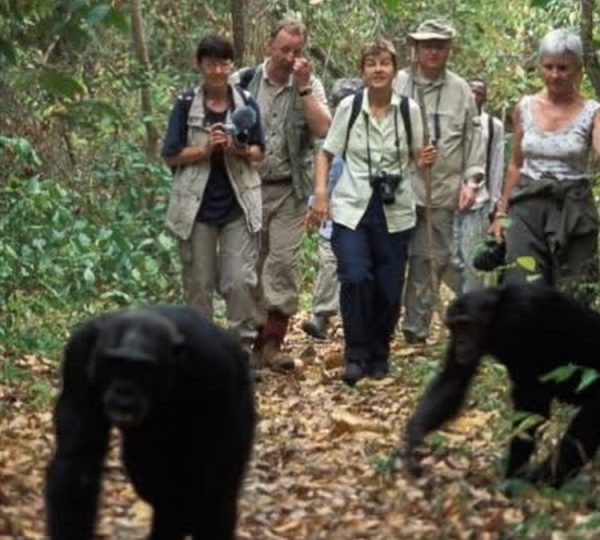
Chimppanzee trekking in Uganda’s Kibale National Park
The legacy of the Ngogo chimpanzee community in Kibale National Park is nothing short of extraordinary—a story that blends scientific discovery, cinematic storytelling, and some of the most shocking insights ever uncovered about animal societies. For decades, Ngogo has stood at the center of primate research, largely through the work of the Ngogo Chimpanzee Project, where scientists have documented behaviors that were once thought to be uniquely human.
From complex political alliances to organized warfare, Ngogo has revealed that chimpanzees possess a level of social intelligence, strategy, and emotional depth far beyond earlier assumptions. One of the most groundbreaking discoveries came from long-term observations showing that chimpanzees engage in coordinated territorial wars—killing rivals, expanding territory, and ultimately gaining reproductive advantages, including increased birth rates and infant survival after victory.
These findings have profoundly influenced how scientists understand the evolutionary roots of human conflict, cooperation, and dominance.Beyond research, Ngogo has also captured global attention through powerful storytelling, most notably in the Netflix documentary Chimp Empire. This cinematic series brought the hidden world of Ngogo to millions, portraying the chimpanzees not just as animals, but as individuals navigating power struggles, loyalty, betrayal, and survival in a complex social “empire.” Filmed over more than a year with the help of researchers and trackers, the series revealed never-before-seen behaviors, including intense rivalries between factions, dramatic leadership battles, and coordinated patrols that resemble military operations.
What made Chimp Empire so compelling was its raw authenticity—it showed that beneath the forest canopy exists a society as politically charged and emotionally rich as any human drama, where dominance can shift overnight and alliances can determine life or death.
Perhaps the most shocking and defining chapter in Ngogo’s legacy is the recently documented chimpanzee civil war in Kibale, a rare and deeply unsettling event that has redefined the limits of animal behavior. After decades of stability, the community fractured into rival factions that began launching coordinated, lethal attacks against one another—something almost never observed within a single chimpanzee society.
Scientists were stunned not only by the scale of the violence, but by the fact that these attacks were carried out against former companions—individuals who had once lived, groomed, and cooperated together. This discovery has forced a major shift in scientific thinking, showing that group identity and conflict can emerge purely from changing social relationships, without the need for culture, religion, or ideology.
In the end, the legacy of the Ngogo chimpanzee community is one of revelation and reflection. It has given the world an unprecedented window into the lives of our closest relatives, reshaped theories about the origins of war and cooperation, and reminded us that the roots of human behavior run far deeper in the natural world than we once believed. From scientific breakthroughs to global documentaries and now one of the most astonishing cases of internal conflict ever recorded in animals, Ngogo stands as a powerful testament to the complexity of life in the wild—and a mirror through which we can better understand ourselves.